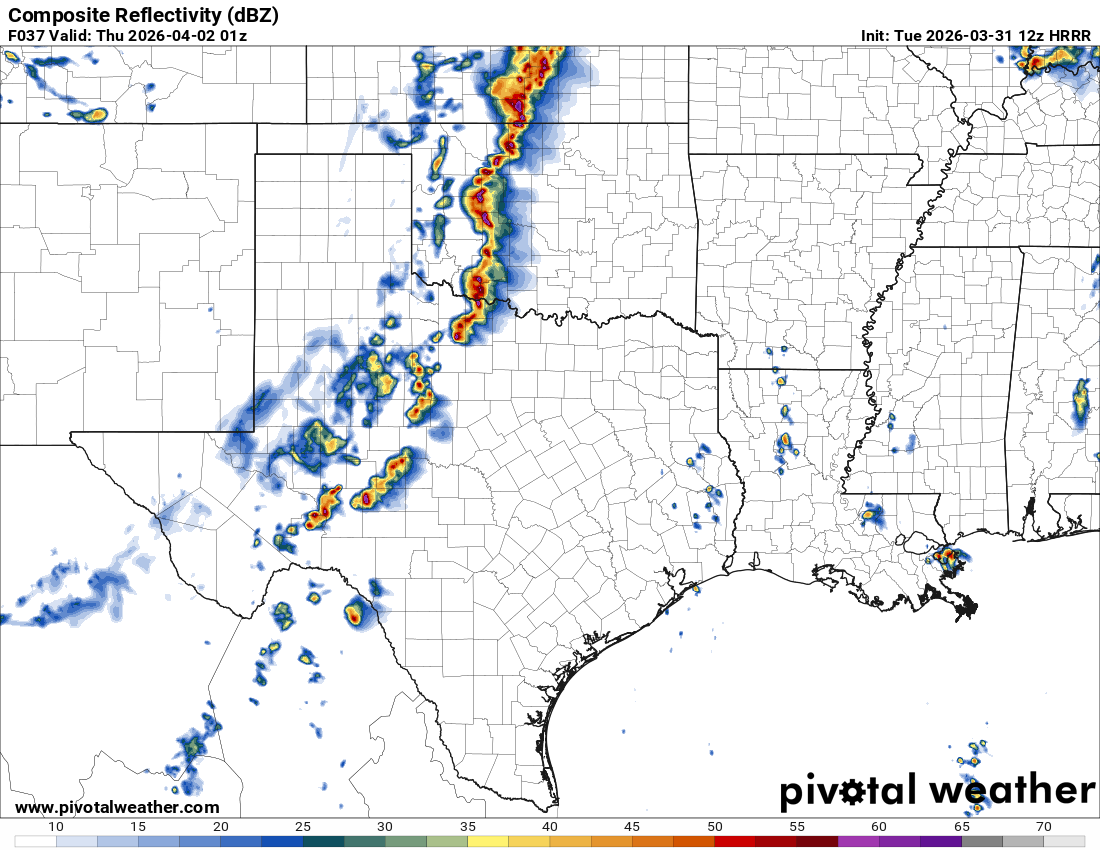
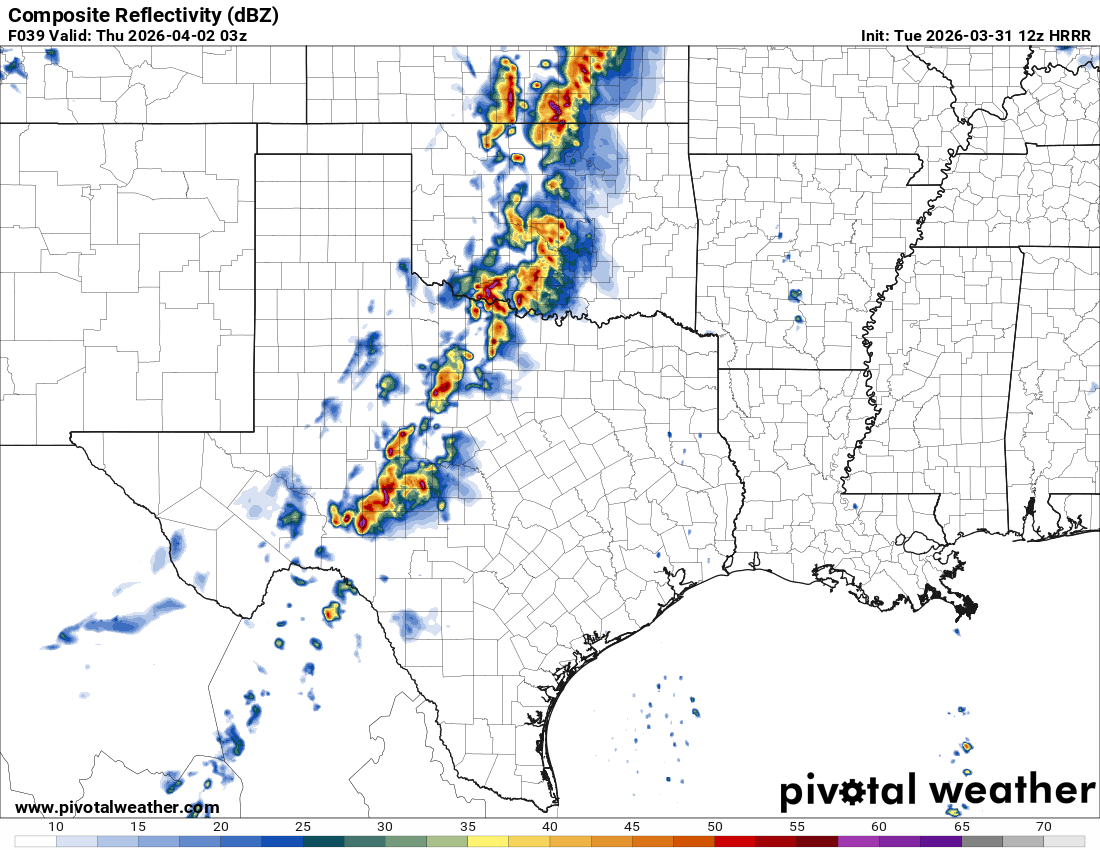
And again consistently for 6 months everything has underperformed except heat and dry
All those pretty maps in January yeah it snowed about a third what they showed
Moderator: S2k Moderators


...Southern Kansas into Oklahoma and northwest Texas...
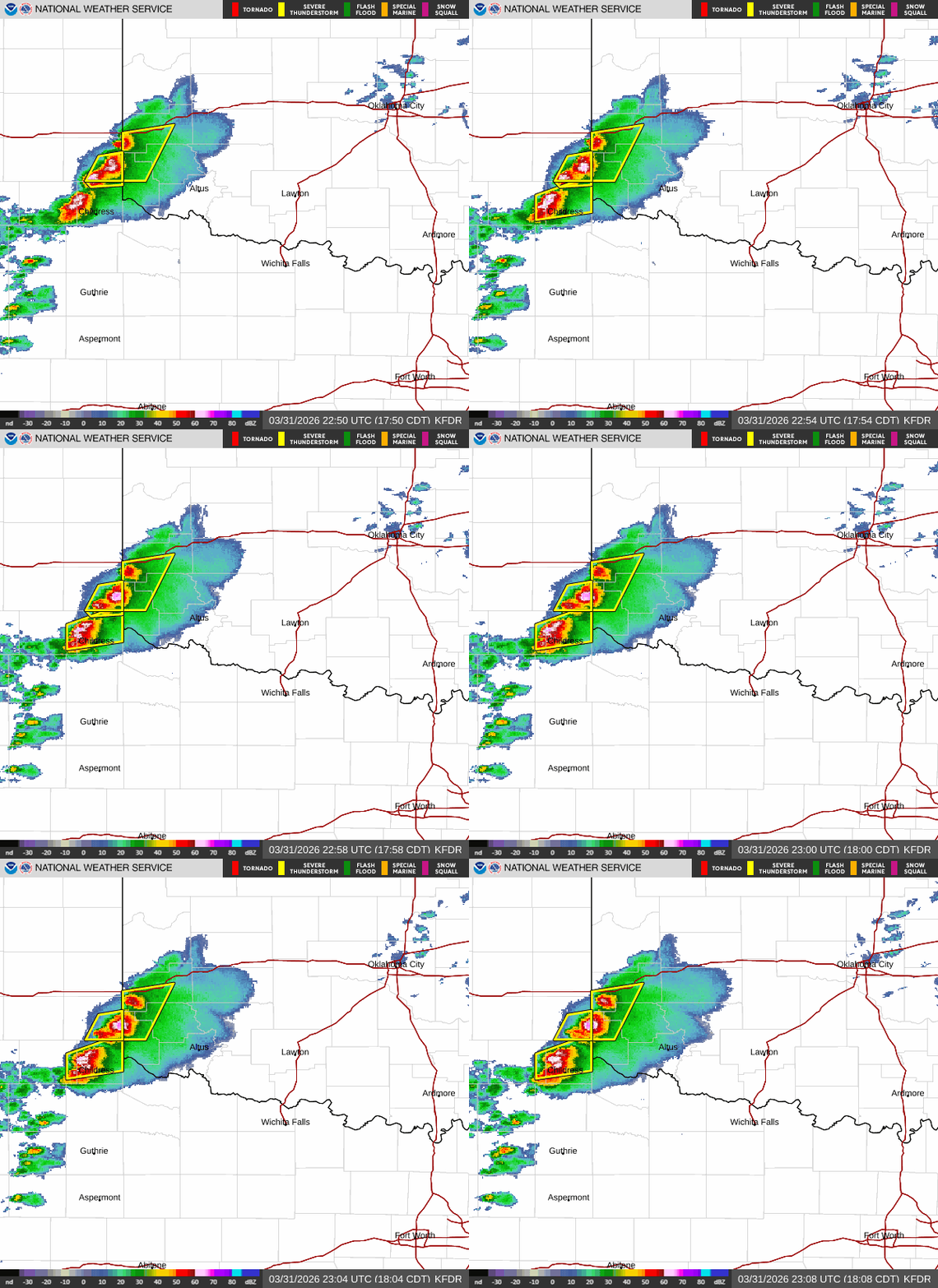
Initiation along the dryline appears likely during the 21-00 UTC
period across western OK into northwest TX as a combination of
diurnal heating and increasing synoptic ascent act to erode
inhibition. Elongated hodographs featuring effective bulk shear
values between 35-45 knots will support initially discrete
supercells capable of large/very large hail and tornadoes (though
uncertainty persists regarding low-level SRH through early evening).
Upscale growth is anticipated at some point during the evening
hours, though there is some uncertainty on when this transition will
occur and the primary threat becomes severe wind. Regardless, an
increase in the nocturnal jet will enlarge low-level hodographs and
maintain the tornado potential into the late evening hours.


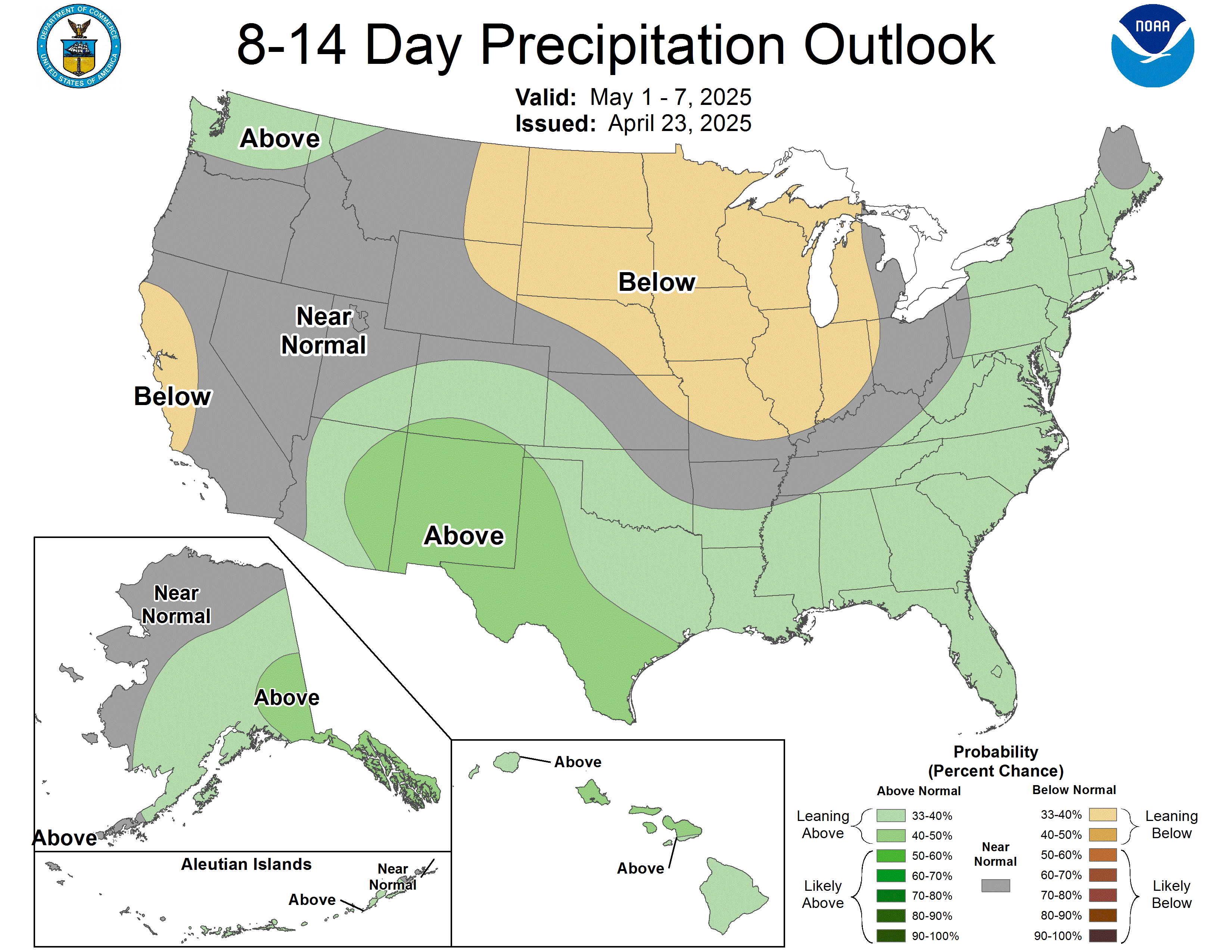
Edwards Limestone wrote:I’m not sold on long term forecast. Not that it matters what I think, but the last few years have been brutal down here. It’s like the tap turned off in 2020 and save for some boom/bust cycles and extreme flooding locally, it’s been consistently dry. El Niños don’t always lead to increased rainfall for SCTX as we all saw a couple of years ago.
To me, it seems like the STJ has kind of shifted north the past few years bringing more storm tracks and rainfall to Oklahoma and north/northeast TX. I don’t know. The drought feedback down here is another hurdle to overcome. Years of below average rainfall eventually just becomes average.
That being said, I’ll take every drop we can get.
JDawg512 wrote:Edwards Limestone wrote:I’m not sold on long term forecast. Not that it matters what I think, but the last few years have been brutal down here. It’s like the tap turned off in 2020 and save for some boom/bust cycles and extreme flooding locally, it’s been consistently dry. El Niños don’t always lead to increased rainfall for SCTX as we all saw a couple of years ago.
To me, it seems like the STJ has kind of shifted north the past few years bringing more storm tracks and rainfall to Oklahoma and north/northeast TX. I don’t know. The drought feedback down here is another hurdle to overcome. Years of below average rainfall eventually just becomes average.
That being said, I’ll take every drop we can get.
The STJ has shifted and this is something climate scientists have been saying for years would happen with a heating planet. Unfortunately these feedbacks if they last long enough can become permanent. Fewer and fewer storm systems are swinging through further south and are shunted further away. Heat ridges are becoming stronger much much earlier in the year and cover much larger areas as we saw with this heat wave really only the northeast U.S. has been spared from with their prolonged cold while most of the rest of the country saw record breaking heat. You are also correct that El Niños patterns aren't necessarily sure bets for us in this region to get rain. I'm also not sure where some are getting the idea that El Niño is just gonna switch on at full force in a month or two. Look at the atmospheric pressures for the past 30 to 90 SOI days between Darwin and Tahiti, the atmosphere is not currently affected by the warming waters and reality is we are still only seeing the start of the Kelvin wave build up as it makes its way across the Pacific. Not only that but there is still some residual cold water pooling up. La Niña atmosphericlly is still alive. It takes time for the atmosphere to react to the ocean surface. We will see how April and May turn out and I am hoping those who say wetter times are coming are right because I am the Rain Miser after all, I'll root for rain any day, however I also have to keep my skeptical hat on for now as well.


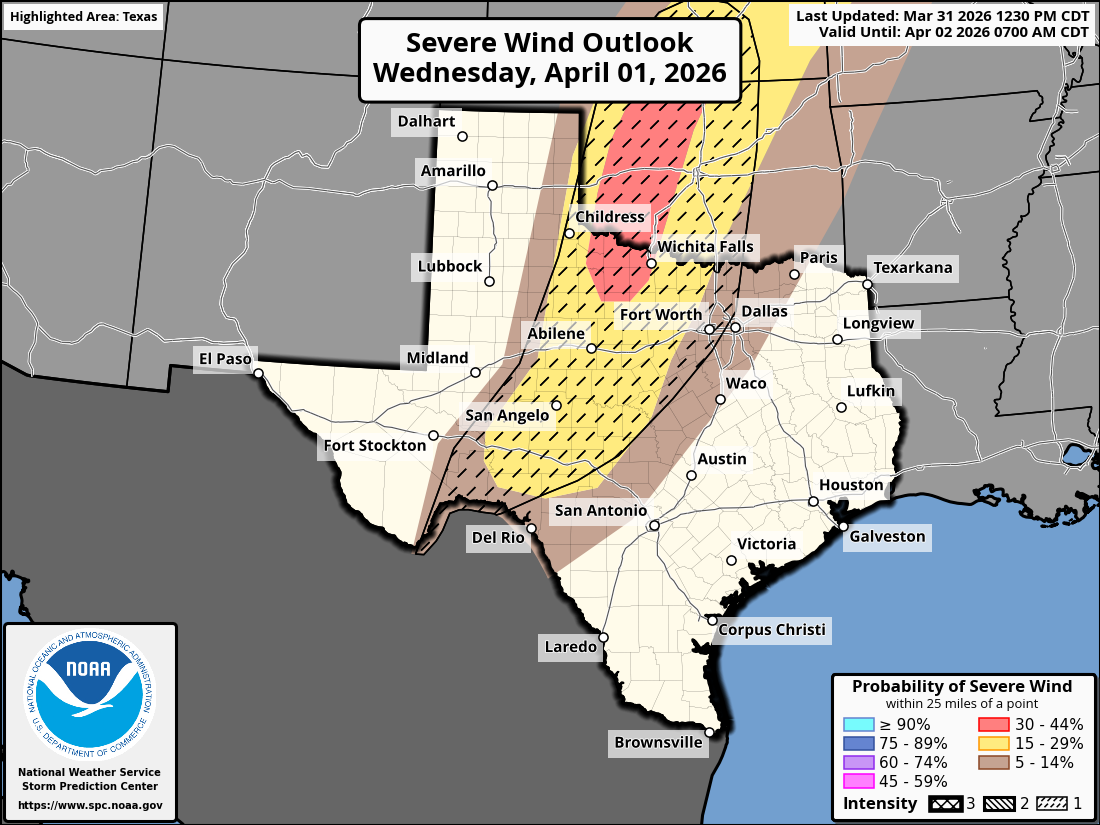
Day 2 Convective Outlook
NWS Storm Prediction Center Norman OK
1230 PM CDT Tue Mar 31 2026
Valid 011200Z - 021200Z
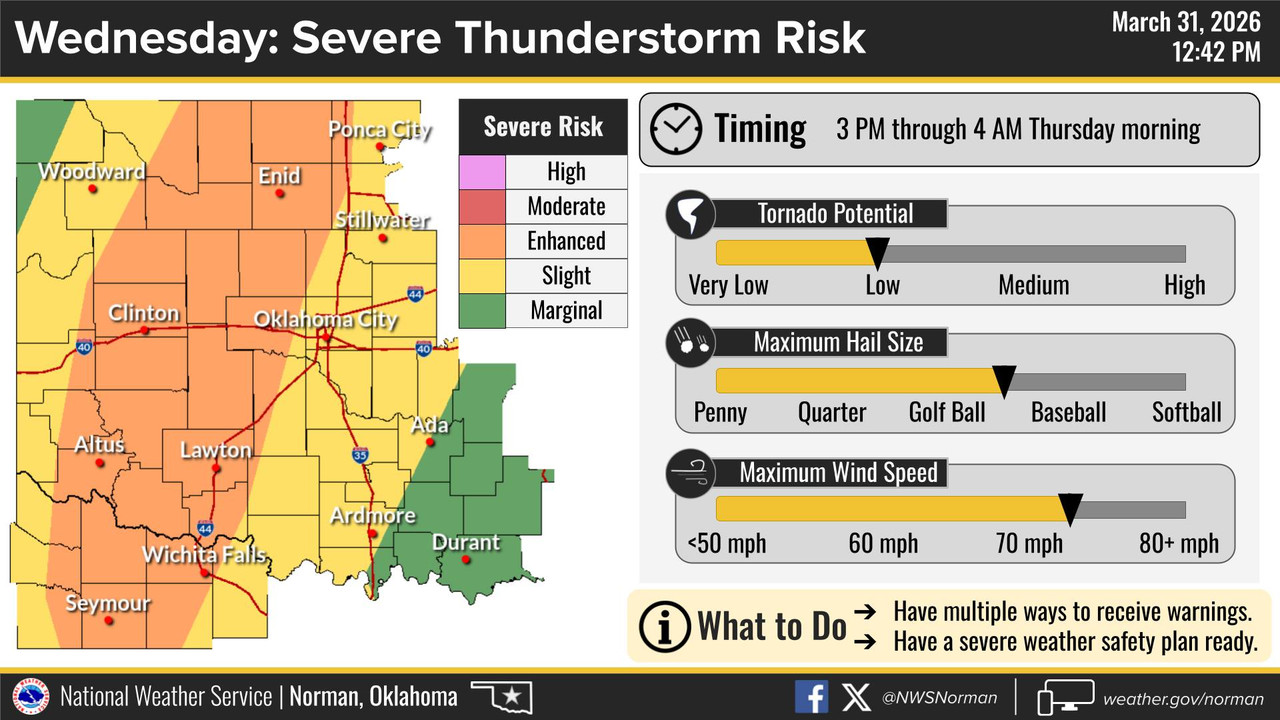
...THERE IS AN ENHANCED RISK OF SEVERE THUNDERSTORMS ACROSS PARTS OF
WESTERN OKLAHOMA...WESTERN NORTH TEXAS...AND SOUTH-CENTRAL KANSAS...
...SUMMARY...
Severe thunderstorms are likely across the southern and central
Plains on Wednesday afternoon and evening. Severe wind gusts, large
hail, and a few tornadoes are the primary concerns. Isolated
strong/severe storms are also possible over parts of the Ohio Valley
into the Mid-Atlantic.
...Southern Plains and Central Plains...
A midlevel trough and accompanying 50-60-kt speed max will advance
eastward from the Great Basin into the southern/central Plains by
Wednesday evening. As related height falls overspread the High
Plains, a lee cyclone will deepen over southeastern CO, while a
southward-extending dryline sharpens over the southern High Plains.
Ample diurnal heating and parcel residence time along the dryline
will promote scattered thunderstorm development in the 20-00Z time
frame -- aided by the strengthening large-scale ascent. Steep
midlevel lapse rates associated with an EML and lower 60s dewpoints
will yield 1500-2000 J/kg MLCAPE in the warm sector. This, combined
with 40-50 kt of effective shear, will favor a mix of semi-discrete
supercells and organized clusters/line segments initially.
The risk of large to very large hail (some 2+ inch diameter) should
be greatest with these initial semi-discrete storms over the
southern/central High Plains. With time, the strengthening DCVA and
expanding cold pools will promote upscale growth into a
north/south-oriented band of storms with embedded supercell
structures -- given elongated hodographs and a substantial
line-orthogonal component to the deep-layer shear. Large hail will
remain possible, though scattered severe wind gusts and a couple
tornadoes will become the main concerns. Additionally, a 40-50+ kt
low-level jet will strengthen ahead of the upscale-growing
convection into the evening, resulting in expanding clockwise-curved
hodographs and additional concerns for a few tornadoes. Higher
tornado probabilities may eventually be needed once confidence in
where the risk will be maximized spatially. Storms will track
eastward across the I-35 corridor into the overnight hours and
continue to pose a damaging-wind risk and perhaps embedded
tornadoes. However, confidence in the overall severe-risk decreases
with eastward extent.

Stratton23 wrote:its long range but boy oh boy the GFS and Euro are both absolutely gully washers, incredibly wet runs


Ntxw wrote:Stratton23 wrote:its long range but boy oh boy the GFS and Euro are both absolutely gully washers, incredibly wet runs
Hawaii has seen some torrential rainfall from a couple of Kona lows. The WWB event is definitely playing a role and as it marches eastward and excites, the STJ will string from that region up to ours in April. Any southwest low system will likely meander and pull a lot of it up.

TomballEd wrote:GFS and Euro starting to converge, as reflect the shower/convective nature of the rain, there are winners and loser. Houston is a loser, but half an inch to an inch isn't a complete bust. Not exactly what I want but I'll take it.

Return to “USA & Caribbean Weather”
Users browsing this forum: Stratton23, wxman22 and 96 guests