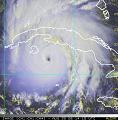
NATL: MELISSA - Aftermath - Discussion: Josh Morgerman video of Melissa is up

Moderator: S2k Moderators

Message
Author
ncforecaster89
Category 1
Category 1
Posts: 262
Age: 55
Joined: Sat Oct 20, 2018 12:32 pm
Contact:

Re: NATL: MELISSA - Post-Tropical - Discussion

#2981 Postby ncforecaster89 » Fri Oct 31, 2025 7:39 pm

CrazyC83 wrote:This is unofficial, but pending surface data, here's my BT analysis:

AL132025, MELISSA, xx,
20251020, 1200, , LO, 13.5N, 66.5W, 30, 1008,
20251020, 1800, , LO, 13.7N, 67.7W, 35, 1006,
20251021, 0000, , LO, 13.9N, 68.9W, 35, 1005,
20251021, 0600, , LO, 14.1N, 70.1W, 40, 1004,
20251021, 1200, , LO, 14.1N, 71.3W, 40, 1003,
20251021, 1800, , LO, 14.1N, 72.5W, 40, 1002,
20251022, 0000, , TS, 14.1N, 73.2W, 45, 1002,
20251022, 0600, , TS, 14.2N, 73.4W, 45, 1001,
20251022, 1200, , TS, 14.3N, 73.6W, 45, 1000,
20251022, 1800, , TS, 14.4N, 73.9W, 40, 1002,
20251023, 0000, , TS, 14.6N, 74.3W, 40, 1004,
20251023, 0600, , TS, 14.8N, 74.6W, 35, 1005,
20251023, 1200, , TS, 15.2N, 75.0W, 35, 1005,
20251023, 1800, , TS, 15.5N, 75.3W, 40, 1002,
20251024, 0000, , TS, 15.7N, 75.6W, 40, 1001,
20251024, 0600, , TS, 16.0N, 75.3W, 40, 1001,
20251024, 1200, , TS, 15.8N, 74.9W, 45, 1000,
20251024, 1800, , TS, 15.8N, 74.5W, 50, 996,
20251025, 0000, , TS, 16.1N, 74.7W, 55, 993,
20251025, 0600, , TS, 16.3N, 74.9W, 60, 986,
20251025, 1200, , HU, 16.4N, 75.1W, 65, 983,
20251025, 1800, , HU, 16.5N, 75.3W, 70, 977,
20251026, 0000, , HU, 16.4N, 75.7W, 85, 970,
20251026, 0600, , HU, 16.3N, 76.0W, 100, 957,
20251026, 1200, , HU, 16.4N, 76.4W, 110, 952,
20251026, 1800, , HU, 16.4N, 76.9W, 120, 944,
20251027, 0000, , HU, 16.4N, 77.3W, 130, 932,
20251027, 0600, , HU, 16.3N, 77.7W, 135, 922,
20251027, 1200, , HU, 16.4N, 78.0W, 145, 913,
20251027, 1800, , HU, 16.4N, 78.3W, 155, 906,
20251028, 0000, , HU, 16.5N, 78.6W, 155, 905,
20251028, 0600, , HU, 16.9N, 78.4W, 155, 900,
20251028, 1200, , HU, 17.5N, 78.1W, 165, 894,
20251028, 1400, I, HU, 17.7N, 78.0W, 170, 892,
20251028, 1700, L, HU, 18.1N, 78.0W, 160, 897,
20251028, 1800, , HU, 18.2N, 77.9W, 140, 910,
20251029, 2200, R, HU, 18.7N, 77.4W, 95, 953,
20251029, 0000, , HU, 18.9N, 77.2W, 100, 952,
20251029, 0600, , HU, 19.8N, 76.3W, 105, 951,
20251029, 0715, L, HU, 20.0N, 76.1W, 105, 950,
20251029, 1200, , HU, 20.9N, 75.8W, 75, 972,
20251029, 1800, , HU, 22.1N, 75.3W, 80, 974,
20251029, 2130, L, HU, 22.5N, 75.0W, 85, 971,
20251030, 0000, , HU, 23.5N, 74.8W, 90, 970,
20251030, 0215, L, HU, 24.0N, 74.5W, 90, 969,
20251030, 0600, , HU, 24.9N, 73.8W, 95, 966,
20251030, 1200, , HU, 26.6N, 72.8W, 95, 964,
20251030, 1800, , HU, 28.8N, 71.0W, 90, 968,
20251031, 0000, , HU, 31.3N, 68.9W, 80, 970,
20251031, 0600, , HU, 34.4N, 65.5W, 75, 972,
20251031, 1200, , HU, 37.5N, 62.1W, 70, 972,
20251031, 1800, , EX, 40.6N, 58.6W, 70, 972,


* Genesis is actually moved back 12 hours, as when it was first declared a TC, it still didn't have a clear single center. With some uncertainty, it is assessed at 22/0000.

* The first three days were a struggle for Melissa. I smoothed that track out and also brought it down as low as 35 kt. There were times that it was barely a TC, but it appeared to remain one throughout as opposed to a disturbance or trough, as there remained a closed low.

* The initial intensification is largely unchanged, although the rapid intensification at first is slowed down as the aircraft data was underperforming satellite estimates. It started to catch up on the 26th and certainly on the 27th.

* The peak intensity will be a long topic of discussion. However, there were a few data points that were in this analysis: the 179 kt FL winds (supporting 161 kt), a dropsonde measurement of 172 kt at the surface, the T8.0+ Dvorak readings and the limited spatial analysis as the aircraft had to quickly leave due to turbulence. A blend of the data lends itself to a peak intensity of 170 kt (+/- 10 kt). That likely occurred at 28/1400, a non-synoptic point, and concurrent with a pressure reading of 892 mb, accepted as the minimum pressure.

* This analysis has slight weakening before landfall assumed by the fact that the cloud tops were not quite as deep (although still very impressive, more T7.5 than T8.0+). There was no aircraft data at the time and no surface data has been received yet. In the absence of any surface data to make an assessment, the landfall intensity is assessed at 160 kt based on that weakening, and the pressure estimate of 897 mb makes the same assumption.

* Melissa clearly weakened over Jamaica, and by the time it emerged over the Cayman Trench, the intensity is estimated to be 95 kt (a non-synoptic point to clearly show it). However, aircraft data suggests it re-intensified some in between Jamaica and Cuba - the landfall at the latter is maintained at 105 kt with a pressure estimate of 950 mb.

* Two landfalls in the Bahamas are added on Long Island and San Salvador Island as well. They were at 85 kt and 90 kt, based on aircraft data.

* Near the Bahamas, it is likely that the 90% rule was still valid, as while the RMW expanded, the cloud tops were still extremely deep. The final peak of 95 kt is based on the readings (FL winds up to 113 kt) but a bit more cautious out of respect of the initial analysis. It is possible Melissa briefly regained major hurricane intensity around 30/0900 but inconclusive.

* The final weakening is accelerated a bit, as by 30/1800, the 90% rule clearly didn't apply as the eyewall was gone and it was beginning its extratropical transition (which is unchanged).


Hi Crazy! I’m very interested as to where I can find the report about the 179 kt FLW you referenced? The highest I’m aware of is the 172 kt measurement during the last pass by RECON obtained at 1350z.
2 likes   

User avatar
cycloneye
Admin
Admin
Posts: 148573
Age: 69
Joined: Thu Oct 10, 2002 10:54 am
Location: San Juan, Puerto Rico

Re: NATL: MELISSA - Post-Tropical - Discussion

#2982 Postby cycloneye » Fri Oct 31, 2025 7:40 pm

0 likes   
Visit the Caribbean-Central America Weather Thread where you can find at first post web cams,radars
and observations from Caribbean basin members Click Here

ncforecaster89
Category 1
Category 1
Posts: 262
Age: 55
Joined: Sat Oct 20, 2018 12:32 pm
Contact:

Re: NATL: MELISSA - Post-Tropical - Discussion

#2983 Postby ncforecaster89 » Fri Oct 31, 2025 7:43 pm


That’s why storm surge/water is the most destructive.
1 likes   

CrazyC83
Professional-Met
Professional-Met
Posts: 34307
Joined: Tue Mar 07, 2006 11:57 pm
Location: Deep South, for the first time!

Re: NATL: MELISSA - Post-Tropical - Discussion

#2984 Postby CrazyC83 » Fri Oct 31, 2025 8:03 pm

ncforecaster89 wrote:
CrazyC83 wrote:This is unofficial, but pending surface data, here's my BT analysis:

AL132025, MELISSA, xx,
20251020, 1200, , LO, 13.5N, 66.5W, 30, 1008,
20251020, 1800, , LO, 13.7N, 67.7W, 35, 1006,
20251021, 0000, , LO, 13.9N, 68.9W, 35, 1005,
20251021, 0600, , LO, 14.1N, 70.1W, 40, 1004,
20251021, 1200, , LO, 14.1N, 71.3W, 40, 1003,
20251021, 1800, , LO, 14.1N, 72.5W, 40, 1002,
20251022, 0000, , TS, 14.1N, 73.2W, 45, 1002,
20251022, 0600, , TS, 14.2N, 73.4W, 45, 1001,
20251022, 1200, , TS, 14.3N, 73.6W, 45, 1000,
20251022, 1800, , TS, 14.4N, 73.9W, 40, 1002,
20251023, 0000, , TS, 14.6N, 74.3W, 40, 1004,
20251023, 0600, , TS, 14.8N, 74.6W, 35, 1005,
20251023, 1200, , TS, 15.2N, 75.0W, 35, 1005,
20251023, 1800, , TS, 15.5N, 75.3W, 40, 1002,
20251024, 0000, , TS, 15.7N, 75.6W, 40, 1001,
20251024, 0600, , TS, 16.0N, 75.3W, 40, 1001,
20251024, 1200, , TS, 15.8N, 74.9W, 45, 1000,
20251024, 1800, , TS, 15.8N, 74.5W, 50, 996,
20251025, 0000, , TS, 16.1N, 74.7W, 55, 993,
20251025, 0600, , TS, 16.3N, 74.9W, 60, 986,
20251025, 1200, , HU, 16.4N, 75.1W, 65, 983,
20251025, 1800, , HU, 16.5N, 75.3W, 70, 977,
20251026, 0000, , HU, 16.4N, 75.7W, 85, 970,
20251026, 0600, , HU, 16.3N, 76.0W, 100, 957,
20251026, 1200, , HU, 16.4N, 76.4W, 110, 952,
20251026, 1800, , HU, 16.4N, 76.9W, 120, 944,
20251027, 0000, , HU, 16.4N, 77.3W, 130, 932,
20251027, 0600, , HU, 16.3N, 77.7W, 135, 922,
20251027, 1200, , HU, 16.4N, 78.0W, 145, 913,
20251027, 1800, , HU, 16.4N, 78.3W, 155, 906,
20251028, 0000, , HU, 16.5N, 78.6W, 155, 905,
20251028, 0600, , HU, 16.9N, 78.4W, 155, 900,
20251028, 1200, , HU, 17.5N, 78.1W, 165, 894,
20251028, 1400, I, HU, 17.7N, 78.0W, 170, 892,
20251028, 1700, L, HU, 18.1N, 78.0W, 160, 897,
20251028, 1800, , HU, 18.2N, 77.9W, 140, 910,
20251029, 2200, R, HU, 18.7N, 77.4W, 95, 953,
20251029, 0000, , HU, 18.9N, 77.2W, 100, 952,
20251029, 0600, , HU, 19.8N, 76.3W, 105, 951,
20251029, 0715, L, HU, 20.0N, 76.1W, 105, 950,
20251029, 1200, , HU, 20.9N, 75.8W, 75, 972,
20251029, 1800, , HU, 22.1N, 75.3W, 80, 974,
20251029, 2130, L, HU, 22.5N, 75.0W, 85, 971,
20251030, 0000, , HU, 23.5N, 74.8W, 90, 970,
20251030, 0215, L, HU, 24.0N, 74.5W, 90, 969,
20251030, 0600, , HU, 24.9N, 73.8W, 95, 966,
20251030, 1200, , HU, 26.6N, 72.8W, 95, 964,
20251030, 1800, , HU, 28.8N, 71.0W, 90, 968,
20251031, 0000, , HU, 31.3N, 68.9W, 80, 970,
20251031, 0600, , HU, 34.4N, 65.5W, 75, 972,
20251031, 1200, , HU, 37.5N, 62.1W, 70, 972,
20251031, 1800, , EX, 40.6N, 58.6W, 70, 972,


* Genesis is actually moved back 12 hours, as when it was first declared a TC, it still didn't have a clear single center. With some uncertainty, it is assessed at 22/0000.

* The first three days were a struggle for Melissa. I smoothed that track out and also brought it down as low as 35 kt. There were times that it was barely a TC, but it appeared to remain one throughout as opposed to a disturbance or trough, as there remained a closed low.

* The initial intensification is largely unchanged, although the rapid intensification at first is slowed down as the aircraft data was underperforming satellite estimates. It started to catch up on the 26th and certainly on the 27th.

* The peak intensity will be a long topic of discussion. However, there were a few data points that were in this analysis: the 179 kt FL winds (supporting 161 kt), a dropsonde measurement of 172 kt at the surface, the T8.0+ Dvorak readings and the limited spatial analysis as the aircraft had to quickly leave due to turbulence. A blend of the data lends itself to a peak intensity of 170 kt (+/- 10 kt). That likely occurred at 28/1400, a non-synoptic point, and concurrent with a pressure reading of 892 mb, accepted as the minimum pressure.

* This analysis has slight weakening before landfall assumed by the fact that the cloud tops were not quite as deep (although still very impressive, more T7.5 than T8.0+). There was no aircraft data at the time and no surface data has been received yet. In the absence of any surface data to make an assessment, the landfall intensity is assessed at 160 kt based on that weakening, and the pressure estimate of 897 mb makes the same assumption.

* Melissa clearly weakened over Jamaica, and by the time it emerged over the Cayman Trench, the intensity is estimated to be 95 kt (a non-synoptic point to clearly show it). However, aircraft data suggests it re-intensified some in between Jamaica and Cuba - the landfall at the latter is maintained at 105 kt with a pressure estimate of 950 mb.

* Two landfalls in the Bahamas are added on Long Island and San Salvador Island as well. They were at 85 kt and 90 kt, based on aircraft data.

* Near the Bahamas, it is likely that the 90% rule was still valid, as while the RMW expanded, the cloud tops were still extremely deep. The final peak of 95 kt is based on the readings (FL winds up to 113 kt) but a bit more cautious out of respect of the initial analysis. It is possible Melissa briefly regained major hurricane intensity around 30/0900 but inconclusive.

* The final weakening is accelerated a bit, as by 30/1800, the 90% rule clearly didn't apply as the eyewall was gone and it was beginning its extratropical transition (which is unchanged).


Hi Crazy! I’m very interested as to where I can find the report about the 179 kt FLW you referenced? The highest I’m aware of is the 172 kt measurement during the last pass by RECON obtained at 1350z.



I saw it on the ATCF fix.

https://www.opah.ncep.noaa.gov/atcf/fix/fal132025.dat

Update: now I see 179 kt was an SFMR reading and 172 kt was a FLW reading. 165 kt might be a better estimate as well, but the dropsonde and satellite estimates, plus poor coverage, still lead me to think it was quite high.
2 likes   

User avatar
cheezyWXguy
Category 5
Category 5
Posts: 6242
Joined: Mon Feb 13, 2006 12:29 am
Location: Dallas, TX

Re: NATL: MELISSA - Hurricane - Discussion

#2985 Postby cheezyWXguy » Fri Oct 31, 2025 10:44 pm

ncforecaster89 wrote:
Teban54 wrote:
ncforecaster89 wrote:

Hi Teban! I appreciate your question. Yes, CDO warming 100% is indicative of weakening regardless of whether land interaction influences it. Not only was there significant warming of the cloud tops within the CDO, but it was most pronounced in the eyewall region. Moreover, the eye was filling, losing symmetry, and beginning to close even before it made landfall. All signs of definitive weakening.

As such, there’s simply no meteorological argument to support the idea that Melissa didn’t weaken prior to landfall. The harder question to answer is to what degree did it do so? Barring in-situ observations (pressure readings) from the landfall area (preferably from within the eye), it’s going to be a more subjective determination than usual, unfortunately.

I’ll add that I totally understand why so many might want Melissa to retain its status as supposedly the strongest and most intense hurricane landfall on record in the Atlantic basin, but as a meteorologist, I can’t allow emotion to influence a wholly objective analysis of the applicable data. More than anything else, I care about truth and accuracy and just simply want to know truly how strong Melissa was at both its peak and landfall. Frustratingly, I also realize there’s a lot more subjectively involved than I’d like…especially in cases like these without the benefit of Doppler radar like we have here in the states.

Personally, I didn't intend to imply that "if CDO warming isn't a definitive sign of weakening => then Melissa can retain its record landfall intensity => woohoo!". My question was intended to be focused primarily on the first part, about appearance vs. intensity alone -- even though I can understand if my post came across the wrong way.

A key factor that made me ask this was: I remember several recent, high-profile hurricanes showing CDO warming (and other degradations) just before landfall, too. The two most vivid examples in my memory were Laura and Ida: they were both frequently refered to as "strengthened all the way until landfall", with wind speed at 130 kt both during peak and at landfall. That's all I remembered at the time of asking the question, hence the confusion.

Having said that, I just realized from their TCRs that NHC had Laura and Ida both weakening by 2mb beween peak and landfall, with a gap of 5-6 hours, even though there were no changes in wind speed.

Again, apologies if the question gave unintended implications.


Completely understand. I apologize if my post came across the wrong way as well.

As far as the two examples you sighted, the FLWs in both suggested they each peaked before landfall as well at 135 kt, even though the NHC chose 130 kt for both time frames (peak and landfall).

Something else I should’ve mentioned earlier, these high-end hurricanes (such as we saw with Patricia) generally weaken much more quickly because they contain such a small RMW as compared to one that’s larger and tends to be more stable. Because it takes such a pristine environment to even attain such an extreme intensity, they’re susceptible to more rapid weakening from a slight change in those conditions.

I also should add that I don’t mean to imply Melissa weakened dramatically, but it’s highly likely it lost about 10 kt from the aforementioned (1300-1400z) earlier peak intensity. Looking back at ADT satellite estimates and reviewing the corresponding imagery, it’s quite possible that Melissa actually peaked just prior to RECON’s arrival and subsequent measurement of the 892 mb pressure reading. Interestingly, ADT analyzed the peak around 1200z. If that’s the case, it would better explain why RECON found the pressure had risen to 894 mb on their last pass through the eye at 1346z.

In my opinion, the most glaring case is one not listed here - hurricane Otis. Otis’ eye rapidly filled prior to landfall and its cdo warmed to some degree, yet its status as a cat5 at landfall was retained. Personally, I can confidently say I have not done the research nor have the expertise to wager an authoritative estimate here, but I’m inclined to believe the NHC’s landfall estimate and suspect that Otis peaked higher than stated prior to landfall. Would be interested to hear your thoughts on that storm if you have any. I’m inclined to think similarly of Melissa, at least in terms of wind, and I think that CrazyC83’s numbers line up nicely. In terms of pressure, I speculate that minimum pressure less than 892mb was achieved, and it seems likely that the pressure rose above 892mb by the time landfall occurred. It’s unfortunate that there is so much subjectivity in estimating what the final estimate of landfall intensity will be, even with the comparatively high amount of sampling that Melissa received in comparison to other comparable situations of high end hurricanes making landfall, but there’s not much that can be done about that when the lives of the people who provide us this data are at risk from the extreme conditions they subject themselves to.
4 likes   

User avatar
Category5Kaiju
Category 5
Category 5
Posts: 4304
Joined: Thu Dec 24, 2020 12:45 pm
Location: Seattle and Phoenix

Re: NATL: MELISSA - Post-Tropical - Discussion

#2986 Postby Category5Kaiju » Fri Oct 31, 2025 10:57 pm

Now that Melissa is gone, all I have to say is....DID I JUST WITNESS THAT?! :eek:

What a horrific and extraordinary storm. Melissa was the storm that will define the 2025 season and turned what looked to be a rather harmless, OTS-heavy year into a calamity.

I think we were all expecting this storm to become a very strong one based on early model consensus, but I don't think anybody really anticipated Labor Day 2.0, especially hitting a country that hasn't been directly struck by a violent hurricane for nearly 40 years (and that was a Category 3, not an upper-echelon Category 5 for god's sake).

It will be interesting to see what post-analysis holds, but I personally wouldn't be shocked to see Melissa's maximum 1-min sustained windspeeds get upgraded to 190 mph, as well as potential minimum pressure adjustments. The damage in western Jamaica is just...wow. I truly hope the victims of this tragedy a strong and speedy recovery, though I know that this process won't be easy and will take many years and steps. Much like what Katrina was for the Lousiana Gulf Coast, or what Maria was for Puerto Rico, Dorian for the Bahamas, Ian for SW Florida, Helene for Appalachia, and so forth, Melissa will go down as the benchmark storm for a specific geographic region of the Atlantic Basin.

As an anecdote, I've known a nurse from my workplace for 2 years; she recently moved to a different state, but I still keep in touch with her. She's always been proud of her Jamaican heritage, and she and her extended family immediately came to my mind when I learned of Melissa's potential direct path toward Jamaica. Thankfully, they were in the eastern part of the island when Melissa came through, so they avoided the worst winds and surge (though they reported that the amount of rain that fell was no joke).


*she gave me this before she left us*

Image
11 likes   
Unless explicitly stated, all info in my posts is based on my own opinions and observations. Tropical storms and hurricanes can be extremely dangerous. Refer to an accredited weather research agency or meteorologist if you need to make serious decisions regarding an approaching storm.

CrazyC83
Professional-Met
Professional-Met
Posts: 34307
Joined: Tue Mar 07, 2006 11:57 pm
Location: Deep South, for the first time!

Re: NATL: MELISSA - Post-Tropical - Discussion

#2987 Postby CrazyC83 » Fri Oct 31, 2025 10:58 pm

One thing is for sure...we won't be seeing Melissa again when the list rotates back in 2031. :Can:
5 likes   

User avatar
Teban54
Category 5
Category 5
Posts: 3786
Joined: Sat May 19, 2018 1:19 pm

Re: NATL: MELISSA - Post-Tropical - Discussion

#2988 Postby Teban54 » Fri Oct 31, 2025 11:19 pm

CrazyC83 wrote:One thing is for sure...we won't be seeing Melissa again when the list rotates back in 2031. :Can:

List 5 was so close to escaping its curse of having at least one name retired on every use... But nope.
6 likes   

ncforecaster89
Category 1
Category 1
Posts: 262
Age: 55
Joined: Sat Oct 20, 2018 12:32 pm
Contact:

Re: NATL: MELISSA - Hurricane - Discussion

#2989 Postby ncforecaster89 » Sat Nov 01, 2025 7:09 am

cheezyWXguy wrote:
ncforecaster89 wrote:
Teban54 wrote:Personally, I didn't intend to imply that "if CDO warming isn't a definitive sign of weakening => then Melissa can retain its record landfall intensity => woohoo!". My question was intended to be focused primarily on the first part, about appearance vs. intensity alone -- even though I can understand if my post came across the wrong way.

A key factor that made me ask this was: I remember several recent, high-profile hurricanes showing CDO warming (and other degradations) just before landfall, too. The two most vivid examples in my memory were Laura and Ida: they were both frequently refered to as "strengthened all the way until landfall", with wind speed at 130 kt both during peak and at landfall. That's all I remembered at the time of asking the question, hence the confusion.

Having said that, I just realized from their TCRs that NHC had Laura and Ida both weakening by 2mb beween peak and landfall, with a gap of 5-6 hours, even though there were no changes in wind speed.

Again, apologies if the question gave unintended implications.


Completely understand. I apologize if my post came across the wrong way as well.

As far as the two examples you sighted, the FLWs in both suggested they each peaked before landfall as well at 135 kt, even though the NHC chose 130 kt for both time frames (peak and landfall).

Something else I should’ve mentioned earlier, these high-end hurricanes (such as we saw with Patricia) generally weaken much more quickly because they contain such a small RMW as compared to one that’s larger and tends to be more stable. Because it takes such a pristine environment to even attain such an extreme intensity, they’re susceptible to more rapid weakening from a slight change in those conditions.

I also should add that I don’t mean to imply Melissa weakened dramatically, but it’s highly likely it lost about 10 kt from the aforementioned (1300-1400z) earlier peak intensity. Looking back at ADT satellite estimates and reviewing the corresponding imagery, it’s quite possible that Melissa actually peaked just prior to RECON’s arrival and subsequent measurement of the 892 mb pressure reading. Interestingly, ADT analyzed the peak around 1200z. If that’s the case, it would better explain why RECON found the pressure had risen to 894 mb on their last pass through the eye at 1346z.

In my opinion, the most glaring case is one not listed here - hurricane Otis. Otis’ eye rapidly filled prior to landfall and its cdo warmed to some degree, yet its status as a cat5 at landfall was retained. Personally, I can confidently say I have not done the research nor have the expertise to wager an authoritative estimate here, but I’m inclined to believe the NHC’s landfall estimate and suspect that Otis peaked higher than stated prior to landfall. Would be interested to hear your thoughts on that storm if you have any. I’m inclined to think similarly of Melissa, at least in terms of wind, and I think that CrazyC83’s numbers line up nicely. In terms of pressure, I speculate that minimum pressure less than 892mb was achieved, and it seems likely that the pressure rose above 892mb by the time landfall occurred. It’s unfortunate that there is so much subjectivity in estimating what the final estimate of landfall intensity will be, even with the comparatively high amount of sampling that Melissa received in comparison to other comparable situations of high end hurricanes making landfall, but there’s not much that can be done about that when the lives of the people who provide us this data are at risk from the extreme conditions they subject themselves to.


Hi Cheesy!

The main difference between Otis and Melissa is that unlike with Otis, we have verifiable evidence that Melissa had begun to weaken (pressure rose 2 mb between last two RECON passes through the eye). Moreover, this observed weakening began at least 4 hours prior to landfall while Otis’ was less than 1.5 hours duration before its own center crossed the shoreline.

As far as Otis is concerned, like with Melissa, it’s highly likely it was about 5 kt stronger than analyzed at its own respective peak.

Keep in mind, too, that I’m only suggesting a relatively minimal differential of 10 kt between its presumed peak intensity I’m advocating for of 165 kt and the likely strength of 155 kt when the center actually crossed the shoreline.

Keep in mind, too, that my analysis of a 165 kt maximum sustained wind intensity is a good bit above what the actual in-situ data would support using the standard reduction factors from FLWs to the surface. To reiterate, highest 700 mb FLW converts to 155 kt and the WL150 winds of 188 kt converts to 156 kt. Despite these data, I’m assuming Melissa potentially contained higher winds in the unsampled NE quadrant (which may not have been the case as in many other instances with high-end hurricanes, that had turned NE, their peak winds were located in the SE quadrant) and/or had achieved a slightly higher intensity just prior to the 892 mb measurement by RECON at 1302z…which the ADT satellite estimates showed.

Even though I’m assigning a 155 kt/899 mb landfall intensity for Melissa at landfall, it’s conceivable that the central pressure had actually risen above that number. As previously mentioned, ADT calculated a 7 mb rise from 1400z to landfall at 1700z while the RECON data itself implies a a greater rate of filling may have occurred…to no less than 10 mb…if we were to simply extrapolate the 2 mb/45 minute rate over those last 4 hours (1300-1700z).

Taking all the aforementioned into account, I feel the intensity estimates I’ve analyzed here best fit the likely strength of this historical hurricane at both its peak and when landfall occurred 3-4 hours, thereafter.
5 likes   

User avatar
galaxy401
Category 5
Category 5
Posts: 2446
Age: 30
Joined: Sat Aug 25, 2012 9:04 pm
Location: Casa Grande, Arizona

Re: NATL: MELISSA - Post-Tropical - Discussion

#2990 Postby galaxy401 » Sat Nov 01, 2025 12:39 pm

I feel like we are over-analyzing every little thing Melissa was doing. Let the NHC do that when they make their TCR report. :D
8 likes   
Got my eyes on moving right into Hurricane Alley: Florida.

emeraldislenc
Category 2
Category 2
Posts: 601
Joined: Fri Aug 24, 2012 4:49 pm
Location: Emerald Isle NC

Re: NATL: MELISSA - Post-Tropical - Discussion

#2991 Postby emeraldislenc » Sat Nov 01, 2025 5:06 pm

I agree let's let the NHC make the final call! It was a horrible storm. We should be using our time helping those in need. Like having fund raisers, helping those who are going out on work teams secure the funding they need! What difference does it make to those who are suffering if it was 180, 185, 190
Or 195. Too many people are suffering! Let's do what we can to help those in need! We will have plenty of time to analyze the storm! Just my thoughts and opinion! Let's pray for Jamaica and Cuba!
1 likes   

User avatar
cheezyWXguy
Category 5
Category 5
Posts: 6242
Joined: Mon Feb 13, 2006 12:29 am
Location: Dallas, TX

Re: NATL: MELISSA - Post-Tropical - Discussion

#2992 Postby cheezyWXguy » Sat Nov 01, 2025 6:57 pm

emeraldislenc wrote:I agree let's let the NHC make the final call! It was a horrible storm. We should be using our time helping those in need. Like having fund raisers, helping those who are going out on work teams secure the funding they need! What difference does it make to those who are suffering if it was 180, 185, 190
Or 195. Too many people are suffering! Let's do what we can to help those in need! We will have plenty of time to analyze the storm! Just my thoughts and opinion! Let's pray for Jamaica and Cuba!

This is a weather thread on a weather board, so people are going to talk about the weather. If you want to start a fundraiser or highlight one for board members to donate to, start a thread to raise awareness and post a link. It would likely get lost in a 100+ page thread like this that’s soon to be archived.
10 likes   

emeraldislenc
Category 2
Category 2
Posts: 601
Joined: Fri Aug 24, 2012 4:49 pm
Location: Emerald Isle NC

Re: NATL: MELISSA - Post-Tropical - Discussion

#2993 Postby emeraldislenc » Sat Nov 01, 2025 10:22 pm

I have already donated to an organization and I challenge you and others to do the same!
2 likes   

ncforecaster89
Category 1
Category 1
Posts: 262
Age: 55
Joined: Sat Oct 20, 2018 12:32 pm
Contact:

Re: NATL: MELISSA - Post-Tropical - Discussion

#2994 Postby ncforecaster89 » Sat Nov 01, 2025 10:28 pm

ljmac75 wrote:Some assorted thoughts on the intensity:

From what I can find, Melissa had the most impressive flight-level and 150 meter average dropsonde winds of the 160 kt hurricanes in this archive I'm looking at. Wilma maxed out with FL winds of 168 kts and none of the best dropsondes made it to the surface. Dorian maxed out at 161 kts flight level and 177 kt 150 meter averaged dropsonde wind. Melissa maxed out at 173 kts at flight level and a 188 kt meter averaged dropsonde wind. Wilma and Dorian are kinda carried by having an insanely low pressure and insanely high SFMR values, respectively, but Melissa can justify 160 kts with the ol reliable flight level and dropsonde winds alone.

The satellite and in-situ estimates are out of alignment enough that I really hope we have some kind of other data for the landfall intensity because otherwise nobody is ever going to shut up about it. Still waiting on what Josh Morgerman got. If he was in the RMW the whole time and didn't get any sort of noticeable drop in winds for the minimum pressure then if I'm using the Schloemer equation right a <900 mbar pressure could be justified by a pressure reading in the 930s, which would also be vaguely unsatisfying. Basically, the only hope we have is for the NHC to determine that Melissa didn't actually make landfall at all so we don't have to argue about this.


In my opinion, there’s way too much inconsistency with a lot of the HURDAT2 intensity estimates.

That said, I’ve always stated that I have very little doubt Dorian’s strength was overestimated and should’ve never been assigned a 160 kt MSW intensity. The unreliable SFMR was the *only* data that supported anything greater than 145 kt. Even so, I still would’ve set the peak and landfall intensity estimates at 150-155 kt and 910 mb.

I’ve already covered the reasons why I feel a legitimate 165 kt peak intensity is certainly justified for Melissa and 155 kt/899 mb is likely the most accurate estimate for its landfall in Jamaica.

As far as Wilma is concerned, even though RECON only measured 700 mb FLWs of 168 kt (which equates to 151 kt at the surface), the NHC assigned it a 160 kt peak intensity under the assumption it continued to strengthen after RECON left the storm…given the pressure was continuing to fall at that time. Consequently, we can’t make a 1 to 1 comparison there regarding the respective FLW observations.

In the case of Melissa, the FLWs and the WL150 each convert to 155 kt, so to assign it even a 160 kt intensity also requires similar assumptions about the possibility there could’ve potentially been stronger winds located in the unsampled NE quadrant, for example. I chose 165 kt to give Melissa the benefit of the doubt for just that specific reason, myself, even though that may not have been the case. We’ll never know for sure, unfortunately.

Lastly, a pressure in the 930’s measured from just outside of the eye (within 2 n mi) wouldn’t even come close to supporting a minimum central pressure of < 900 mb. For example, a pressure of 942 mb was recorded at a distance of 2 n mi from just outside the eye of hurricane Andrew (at the innermost portion of the eastern eyewall, as well). It’s also important to mention that unlike with Melissa, hurricane Andrew was still strengthening rapidly through landfall and I’d argue that 150 kt is a far more accurate assessment of its true intensity. Using that as a proxy, you’d need a pressure no greater than 919 mb to make the assumption that Melissa might’ve contained a minimum central pressure of 899 mb.
1 likes   

ncforecaster89
Category 1
Category 1
Posts: 262
Age: 55
Joined: Sat Oct 20, 2018 12:32 pm
Contact:

Re: NATL: MELISSA - Post-Tropical - Discussion

#2995 Postby ncforecaster89 » Sat Nov 01, 2025 10:47 pm

Ubuntwo wrote:
ljmac75 wrote:Some assorted thoughts on the intensity:

From what I can find, Melissa had the most impressive flight-level and 150 meter average dropsonde winds of the 160 kt hurricanes in this archive I'm looking at. Wilma maxed out with FL winds of 168 kts and none of the best dropsondes made it to the surface. Dorian maxed out at 161 kts flight level and 177 kt 150 meter averaged dropsonde wind. Melissa maxed out at 173 kts at flight level and a 188 kt meter averaged dropsonde wind. Wilma and Dorian are kinda carried by having an insanely low pressure and insanely high SFMR values, respectively, but Melissa can justify 160 kts with the ol reliable flight level and dropsonde winds alone.

The satellite and in-situ estimates are out of alignment enough that I really hope we have some kind of other data for the landfall intensity because otherwise nobody is ever going to shut up about it. Still waiting on what Josh Morgerman got. If he was in the RMW the whole time and didn't get any sort of noticeable drop in winds for the minimum pressure then if I'm using the Schloemer equation right a <900 mbar pressure could be justified by a pressure reading in the 930s, which would also be vaguely unsatisfying. Basically, the only hope we have is for the NHC to determine that Melissa didn't actually make landfall at all so we don't have to argue about this.

I made a post earlier on what we should expect from Josh's reading. Seems likely he went past the RMW: radar and the recon wind profile indicates he should have seen some slackening of the winds as he entered the very edge of the eyewall, but not a calm. So we should expect a pressure below the 930s. Dropsondes confirm that max winds were occurring with a pressure in the upper 920s remarkably.

The main issue is the sheer steepness of the pressure gradient. Josh's location in Crawford was ~5.5 miles from the storm's center at closest approach. Mapping this to recon data (NOAA42/Flight 23), this distance from the center falls between two HDOBs - one with a pressure of 899.2 and the other 915.4. So much uncertainty! I see the 900-910mb range as most likely in the case of constant intensity. A pressure in the 910s would be a decent indication of some filling before landfall, and IMO one in the 920s would confirm it.


I’m just catching up on reading posts I seemed to have missed previously. Appears we have the same thoughts on what type of pressure measurement is necessary from Crawford to justify a central pressure of 899 mb or less. Regardless, there’s still going to be a fair amount of subjectivity involved, unfortunately.

Another problem is determining the precise distance Josh was located from the geometric center, given the poor radar coverage and the associated reliance on Satellite imagery, which can lead to some error, there.

The last minute wobble to the N added so much more uncertainty than otherwise would’ve been the case. :(
2 likes   

User avatar
cycloneye
Admin
Admin
Posts: 148573
Age: 69
Joined: Thu Oct 10, 2002 10:54 am
Location: San Juan, Puerto Rico

Re: NATL: MELISSA - Aftermath - Discussion

#2996 Postby cycloneye » Sun Nov 02, 2025 12:32 pm

0 likes   
Visit the Caribbean-Central America Weather Thread where you can find at first post web cams,radars
and observations from Caribbean basin members Click Here

User avatar
Hurricane2022
Category 5
Category 5
Posts: 1955
Joined: Tue Aug 23, 2022 11:38 pm
Location: Araçatuba, Brazil

Re: NATL: MELISSA - Aftermath - Discussion

#2997 Postby Hurricane2022 » Sun Nov 02, 2025 2:53 pm

3 likes   
Sorry for the bad English sometimes...!
For reliable and detailed information for any meteorological phenomenon, please consult the National Hurricane Center, Joint Typhoon Warning Center , or your local Meteo Center.

--------

ECCE OMNIA NOVA FACIAM (Ap 21,5).

CrazyC83
Professional-Met
Professional-Met
Posts: 34307
Joined: Tue Mar 07, 2006 11:57 pm
Location: Deep South, for the first time!

Re: NATL: MELISSA - Post-Tropical - Discussion

#2998 Postby CrazyC83 » Sun Nov 02, 2025 3:54 pm

ncforecaster89 wrote:
ljmac75 wrote:Some assorted thoughts on the intensity:

From what I can find, Melissa had the most impressive flight-level and 150 meter average dropsonde winds of the 160 kt hurricanes in this archive I'm looking at. Wilma maxed out with FL winds of 168 kts and none of the best dropsondes made it to the surface. Dorian maxed out at 161 kts flight level and 177 kt 150 meter averaged dropsonde wind. Melissa maxed out at 173 kts at flight level and a 188 kt meter averaged dropsonde wind. Wilma and Dorian are kinda carried by having an insanely low pressure and insanely high SFMR values, respectively, but Melissa can justify 160 kts with the ol reliable flight level and dropsonde winds alone.

The satellite and in-situ estimates are out of alignment enough that I really hope we have some kind of other data for the landfall intensity because otherwise nobody is ever going to shut up about it. Still waiting on what Josh Morgerman got. If he was in the RMW the whole time and didn't get any sort of noticeable drop in winds for the minimum pressure then if I'm using the Schloemer equation right a <900 mbar pressure could be justified by a pressure reading in the 930s, which would also be vaguely unsatisfying. Basically, the only hope we have is for the NHC to determine that Melissa didn't actually make landfall at all so we don't have to argue about this.


In my opinion, there’s way too much inconsistency with a lot of the HURDAT2 intensity estimates.

That said, I’ve always stated that I have very little doubt Dorian’s strength was overestimated and should’ve never been assigned a 160 kt MSW intensity. The unreliable SFMR was the *only* data that supported anything greater than 145 kt. Even so, I still would’ve set the peak and landfall intensity estimates at 150-155 kt and 910 mb.

I’ve already covered the reasons why I feel a legitimate 165 kt peak intensity is certainly justified for Melissa and 155 kt/899 mb is likely the most accurate estimate for its landfall in Jamaica.

As far as Wilma is concerned, even though RECON only measured 700 mb FLWs of 168 kt (which equates to 151 kt at the surface), the NHC assigned it a 160 kt peak intensity under the assumption it continued to strengthen after RECON left the storm…given the pressure was continuing to fall at that time. Consequently, we can’t make a 1 to 1 comparison there regarding the respective FLW observations.

In the case of Melissa, the FLWs and the WL150 each convert to 155 kt, so to assign it even a 160 kt intensity also requires similar assumptions about the possibility there could’ve potentially been stronger winds located in the unsampled NE quadrant, for example. I chose 165 kt to give Melissa the benefit of the doubt for just that specific reason, myself, even though that may not have been the case. We’ll never know for sure, unfortunately.

Lastly, a pressure in the 930’s measured from just outside of the eye (within 2 n mi) wouldn’t even come close to supporting a minimum central pressure of < 900 mb. For example, a pressure of 942 mb was recorded at a distance of 2 n mi from just outside the eye of hurricane Andrew (at the innermost portion of the eastern eyewall, as well). It’s also important to mention that unlike with Melissa, hurricane Andrew was still strengthening rapidly through landfall and I’d argue that 150 kt is a far more accurate assessment of its true intensity. Using that as a proxy, you’d need a pressure no greater than 919 mb to make the assumption that Melissa might’ve contained a minimum central pressure of 899 mb.


The size of the RMW was about 7 nautical miles? That would provide a starting point.

The 172 kt dropsonde deserves some weight in the sample, although the 179 kt SFMR definitely should be ignored.
1 likes   

User avatar
Ubuntwo
Category 5
Category 5
Posts: 1459
Age: 31
Joined: Thu Oct 05, 2017 10:41 pm

Re: NATL: MELISSA - Post-Tropical - Discussion

#2999 Postby Ubuntwo » Sun Nov 02, 2025 4:09 pm

CrazyC83 wrote:The size of the RMW was about 7 nautical miles? That would provide a starting point.

The 172 kt dropsonde deserves some weight in the sample, although the 179 kt SFMR definitely should be ignored.

The 172kt measurement was instantaneous, a standard reduction of the 150m averaged wind (188kt) translates to 156kt 1-min sustained surface winds. That is at one point in the storm, though, and not the strongest quad, which was likely part of the NHC's justification for jumping to 160kt.

Another data point is KZC analysis, which comes out to 166.7kt for the recon-measured 892mb peak.
2 likes   
Kendall -> SLO -> PBC

Memorable Storms: Katrina (for its Florida landfall...) Wilma Matthew Irma

MarioProtVI
Category 5
Category 5
Posts: 1032
Age: 24
Joined: Sun Sep 29, 2019 7:33 pm
Location: New Jersey

Re: NATL: MELISSA - Aftermath - Discussion

#3000 Postby MarioProtVI » Sun Nov 02, 2025 6:20 pm

I thought Milton wouldn’t be outdone for a while but apparently Melissa decided to do just that this year :lol: but Milton’s EI episode still puts it a little over Melissa, but for the most part they’re basically tied for the most insane episodes of TC tracking that I’ve experienced. Good riddance to Melissa especially though, she ain’t coming back :spam:

2 likes   


Return to “2025”

Who is online

Users browsing this forum: No registered users and 47 guests