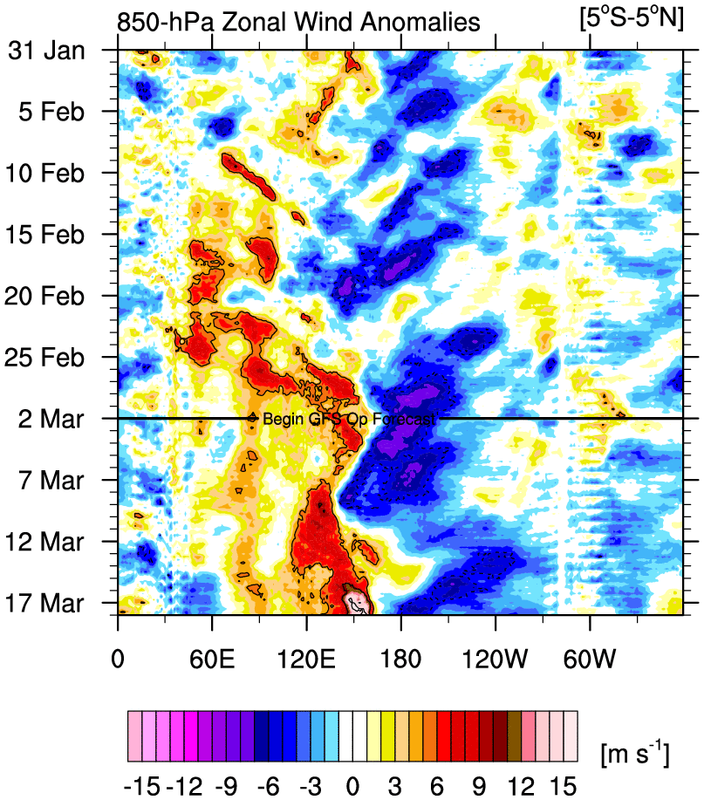
cycloneye wrote:Kingarabian wrote:NCEP models are all in on a strong MJO in the WPAC. Euro is still weaker.
Do you have graphic(s)?


Long range GEFS and CFS
Moderator: S2k Moderators


cycloneye wrote:Kingarabian wrote:NCEP models are all in on a strong MJO in the WPAC. Euro is still weaker.
Do you have graphic(s)?









 EPS extended range has definitely trended upwards towards Pacific westerlies. See https://charts.ecmwf.int/products/mofc_ ... 0850%20hPa

jconsor wrote:Scott is an experienced long range forecaster who clearly explains his reasoning. He intimates that the gap between atmospheric impacts of El Nino and the SST anomalies in the ENSO region may be even larger than 2023:
https://www.linkedin.com/posts/scott-yu ... 7X02RAnqV4


Users browsing this forum: bird and 130 guests